The final design
PROJECT STAGES
Law Decree 35 of 31 March 2023 (converted into Law 58 of 26 May 2023) established the restart of activity leading to construction of the Strait of Messina Bridge.
FINAL DESIGN update
STRETTO DI MESSINA APPROVES FINAL DESIGN AND SUBMITS IT TO MINISTRIES AND RELEVANT AUTHORITIES
SERVICES CONFERENCE IS CONVENED AND EIA STARTS
EIA APROVAL
CIPESS APPROVAL
CONSTRUCTION BEGINS
WORK DUE TO BE COMPLETED IN 7.5 YEARS
- The Company called Stretto di Messina SpA, which holds the concession to build the Bridge, is “re-established” from June 2023.
- New shares with a total value of €370 million, reserved for the Ministry of the Economy and Finance, are subscribed for on 18 December 2023.
- On 15 February 2024, the Company’s Board of Directors approves the updated version of the Final Design of 2011, following a thorough examination involving the Company’s technical experts, the Project Management Consultant, an Expert Panel with responsibility for overseeing technical and specialist aspects, consisting of four leading experts in aerodynamics, aeroelastics, seismology, geotechnics and the environment, and the Scientific Committee.
- On 13 June 2024, the European Council confirms that the Strait of Messina Bridge is a key component of the “Scandinavian-Mediterranean” Corridor.
- On 17 July 2024, Stretto di Messina is awarded funding under the Connecting Europe Facility for Transport – open to all EU countries to finance transport projects.
- On 13 November 2024, the Environmental Impact Assessment Committee expresses a favourable opinion on the design, a key step marking a first for the project.
- On 21 May 2025, the Ministry for the Environment and Energy Security’s Environmental Impact Assessment Technical Committee expresses a favourable opinion on the Assessment of the Implications for the Site, stating that “all the documentation received shows that the Compensatory Measures are consistent with the need to guarantee that the site conservation goals can be met and are overall in line with the aims of the Natura 2000 network”. The Committee also issued a positive opinion on the final version of the information package to be submitted to the European Commission.
- On 1 August 2025, Stretto di Messina signs the III Addendum to the Concession Arrangement agreed with the grantor, the Ministry of Infrastructure and Transport.
- Between 1 and 6 August, Stretto di Messina signs the four addenda to the contracts with the General Contractor, Eurolink, led by the Webuild Group, with Parsons Transportation Group acting as the Project Management Consultant, Edison Next Environment providing environmental monitoring services, and Marsh acting as insurance advisor and broker in relation to construction of the Strait of Messina Bridge. The four contracts will take effect again once the CIPESS resolution becomes effective and all outstanding litigation has been withdrawn.
- On 6 August 2025, CIPESS issues Resolution 41/2025 approving the final design, the financial plan and the environmental documentation.
- On 27 November and 16 December 2025, the Court of Auditors refuses to provide clearance for CIPESS Resolution 41/2025 and the III Addendum to the Concession Arrangement of 30 December 2003.
- The Law Decree of 11 March 2026 (converted into Law 71 of 8 May 2026) reiterates the Government’s intention to build the bridge, confirming that the project is fully funded. The Law addresses the Court of Auditors’ main concerns, setting out the conditions to be met with the aim of obtaining full clearance from the Court.
- In March 2026, the Ministry of Infrastructure and Transport and the Ministry for the Environment and Energy Security submit the key information requested by the Environment Directorate-General and the Internal Markets Directorate-General following the meeting held in Brussels. Dialogue with the EU, initiated by the Ministry of Infrastructure and Transport immediately after the restart of the project, is continuing without a hitch. As noted by officials from the Commission, there are no infraction procedures related to the bridge.
- On 15 May 2026, the Court of Auditors provided clearance for the Framework Agreement between the Ministry of Infrastructure and Transport , the Ministry of the Economy and Finance, Sicily Regional Authority, Calabria Regional Authority, Rete Ferroviaria Italiana, Anas and Stretto di Messina.
- On 27 May, the transport regulator, ART, issues a favourable opinion on the Financial Plan.
- On 4 August 2026, a spokesperson for the EU Commission confirmed the correct application of and compliance with the provisions of art. 72 of the Procurement Directive. The increase in the price payable to the General Contractor falls within the 50% cap and does not, therefore, require a new call for tenders. The increase in the cost primarily reflects price inflation and not additional works that may impact compliance with the cap set by the Directive. The EU Commission has also clarified that any future cost adjustments for new works will be assessed separately and not cumulatively.
- On 4 August 2026, the Italian Cabinet approved the report setting out the imperative reasons of overriding public interest (the “IROPI report”), in implementation of article 6.4 of the EU’s Habitats Directive, in relation to construction of the Strait of Messina Bridge.
- On 6 August 2026, the Higher Council of Public Works unanimously gave the green light for the start of the detailed planning phase.
The estimated total cost of the project is €13,532 million. This cost is fully covered by public funding of €13,162 million, in addition to €370 million raised by the rights issue carried out by Stretto di Messina and subscribed for by the Ministry of the Economy and Finance in December 2023.
Entities engaged in the project
Stretto di Messina has taken an innovative approach to structuring the organisation tasked with delivering the project. This involves a number of entities, including the General Contractor, the Project Management Consultant and the Environmental Monitor.
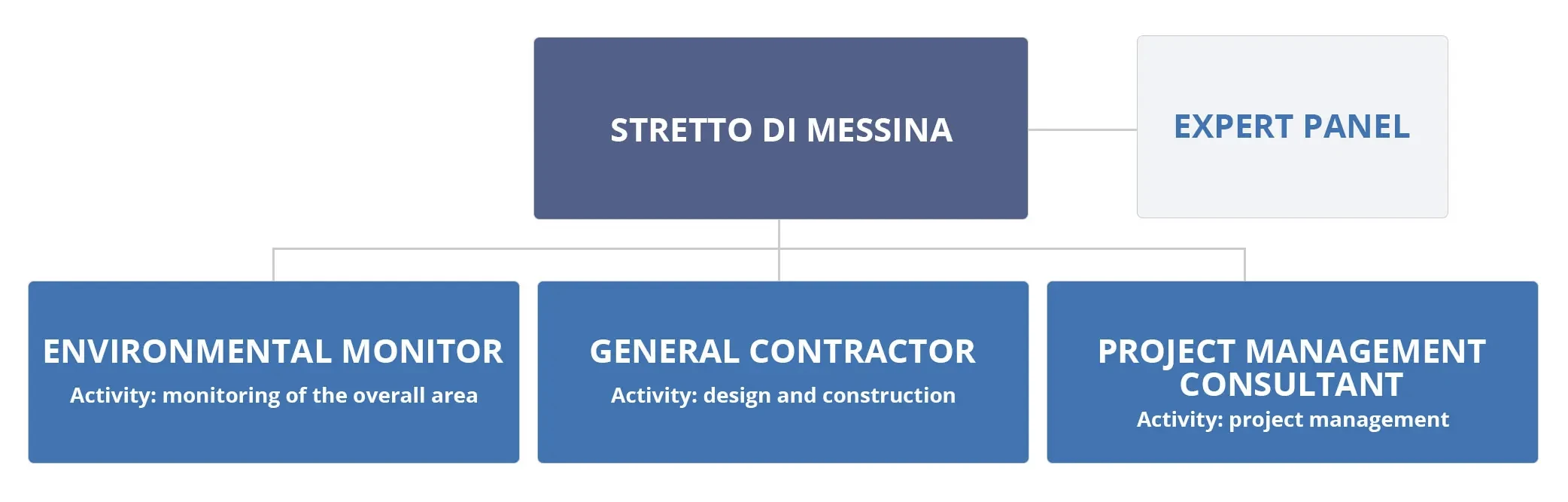
Stretto di Messina holds the concession to develop, design, finance, build and operate the Strait of Messina Bridge. It is responsible for the entire construction process and, subsequently, for operation of the infrastructure, with the exclusion of the railway tracks.
Selected following an international tender process, the Project Management Consultant is responsible for controlling and overseeing preparation of the final and detailed designs and construction of the Strait of Messina Bridge and its road and rail links. It is also responsible for control and oversight of the Environmental Monitor.
The Project Management Consultant is the US company Parsons Transportation Group, the global leader in the design and construction of suspension bridges. Stretto di Messina’s decision to adopt the project management model is of strategic importance. The aim is to take the most appropriate approach to overseeing and monitoring all the operational and design-related variables to ensure that the bridge meets the relevant quality standards and is delivered on time and within the established budget. Among other things, this will mean ensuring the closest possible coordination of all the entities involved in construction of the infrastructure.
The General Contractor is the entity selected by Stretto di Messina, following an international tender process, to produce the final and detailed designs and build the Strait of Messina Bridge and its road and rail links. It is also responsible for works supervision, the environmental monitoring of sites and HSE management.
The General Contractor is the temporary consortium, Eurolink, consisting of the lead contractor, Webuild SpA, and the following members:
- Sacyr SA (Spain)
- Società Italiana Per Condotte D’Acqua SpA
- Cooperativa Muratori & Cementisti-CMC di Ravenna
- Ishikawajima-Harima Heavy Industries CO Ltd. (Japan)
- A.C.I. S.c.p.a - Consorzio Stabile.
The bridge designer is the Danish company, Cowi.
Selected following an international tender process, this entity conducts environmental, territorial and social monitoring on behalf of Stretto di Messina during pre-construction, construction and operation of the Strait of Messina Bridge and its road and rail links.
The Environmental Monitor is the temporary consortium led by Edison Next Environment Srl.
The surveys conducted by the Monitor play a key role in assessing the territorial, environmental and socioeconomic impacts of the infrastructure. They will enable Stretto di Messina to supervise and obtain real-time confirmation of the effectiveness of the mitigating measures planned and implemented.
Technical features
- Central suspended span: 3,300 metres
- Total length: 3,666 metres (including two 183-metre side spans)
- Height of the towers at each end: 399 metres
- Suspension cables: 4 with a diameter of 1.26 metres (each consisting of 44,323 steel wires)
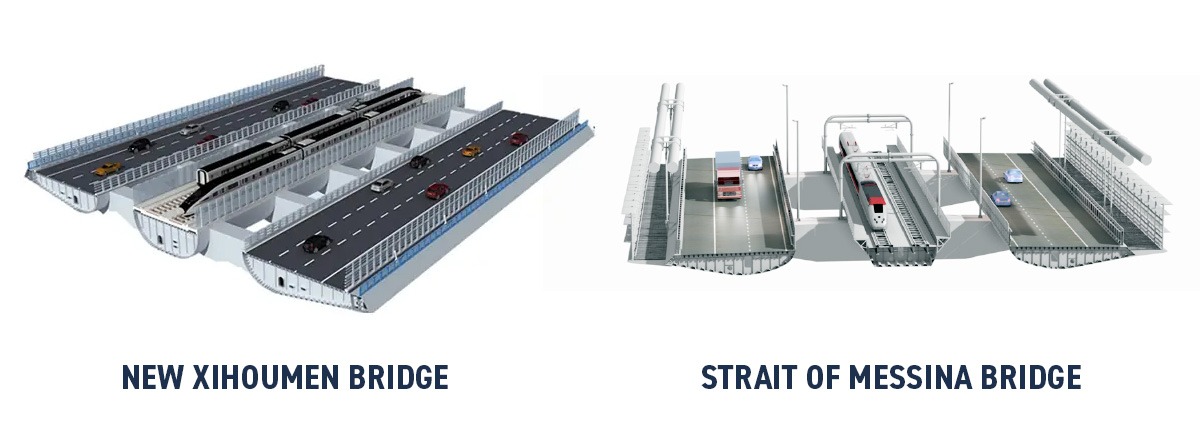
- Width of the deck: 60.4 metres (3 road lanes in each direction, 2 service lanes and 2 rail tracks)
- Clearance: 72 metres over a width of 600 metres at its widest point in the center of the Strait. With a full load on the road lanes and two passenger trains simultaneously, this height reaches 70 meters.
- Open to traffic 365 days a year, 24 hours a day
- Useful life: 200 years
- 40 km of road and railway connections
EARTHQUAKES, WIND AND RAILWAY RUNNABILITY: HIGHEST LEVELS OF SAFETY
The bridge and land-based links are capable of withstanding:
Suspension bridges such as the Strait of Messina Bridge are structures that are by nature not exposed to earthquakes given that they are broadly unaffected by seismic frequencies. The impact of an earthquake on the bridge, with particular regard to land-based infrastructure, was paid great attention right from the beginning of the design process. The seismogenic potential of the area around the Strait is not capable of producing earthquakes of a greater magnitude than the one taken into account in the bridge design (7.1 on the Richter scale). With an earthquake of this magnitude, the bridge remains within the elastic field, without incurring damage, and thereby providing further safety margins beyond the threshold provided for. Studies conducted over many decades have reinforced our understanding of the earthquake of 1908 (7.1 on the Richter scale) and of the resulting main fault, classifying it as an extremely rare event not expected to be repeated for over two thousand years. In addition, as noted earlier, as part of the update of the final design, the seismic characteristics of the area around the Strait were reviewed in 2023.
Thanks to the aerodynamic nature of the wing-like profile, the bridge is designed to withstand wind speeds of up to 216 km per hour, even if in more than twenty years of wind monitoring by a local meteorological station the maximum average wind speed at the level of the deck was approximately 120 km per hour. Years of studies and wind tunnel testing have enabled us to achieve excellent levels of crossing comfort, ensuring the bridge can remain open to road and rail traffic 24 hours a day, 365 days a year.
The overall size of the bridge was established taking into account two 750-metre-long freight trains on each track.
Rail runability analyses were conducted in compliance with domestic and international design practices, taking into account all conditions in terms of road and rail load and environmental conditions related to temperature, seismic activity and wind. This enabled us to assess compliance with safety, operational and comfort requirements for all types of train (HS, intercity, regional, freight) that will use the bridge. The analyses, conducted by both the designer and by Parsons, using advanced mathematical models, showed that the trains run in compliance with the runability requirements outlined in the project specifications and European railway standards, even under the heaviest load conditions.
Key updates introduced by the designer’s report
On 15 February 2024, Stretto di Messina’s Board of Directors approved the Designer’s Report supplementing the Final Design of 2011, confirms the alignment of the Final Design with the Preliminary Design and identifies further requirements to be satisfied in the Detailed Design to ensure that it takes into account:
a) NTC2018 construction standards and the resulting changes to the geotechnical assessment;
b) the latest safety regulations;
c) specific design standards in design manuals currently in use, save for any exceptions;
d) environmental compatibility;
e) any further design adjustments deemed to be essential in view of recent developments in technology and in the use of building materials;
f) the testing called for in the opinion issued by the Scientific Committee.
• BIM (Building Information Modelling): preparation of the detailed design using digital models, enabling integrated management of all the project’s technical data
• Support for site management and construction (onsite BIM): the use of a digital model on site to optimise detailed operational planning, monitor the progress of work and ensure construction quality
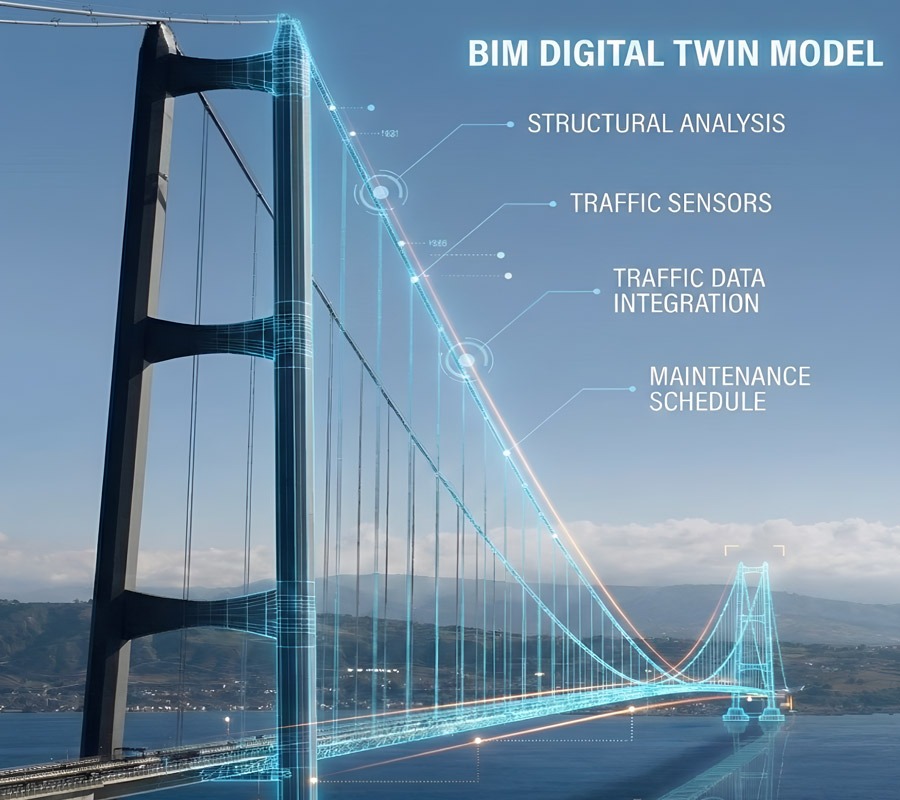
• Digital Twin: creation of a digital twin for the purposes of simulation, real-time monitoring and predictive maintenance of the structures.
• Artificial Intelligence (AI): the upgrade of centralised management systems using advanced algorithms to analyse data from sensors, optimise traffic flow and maximise safety.

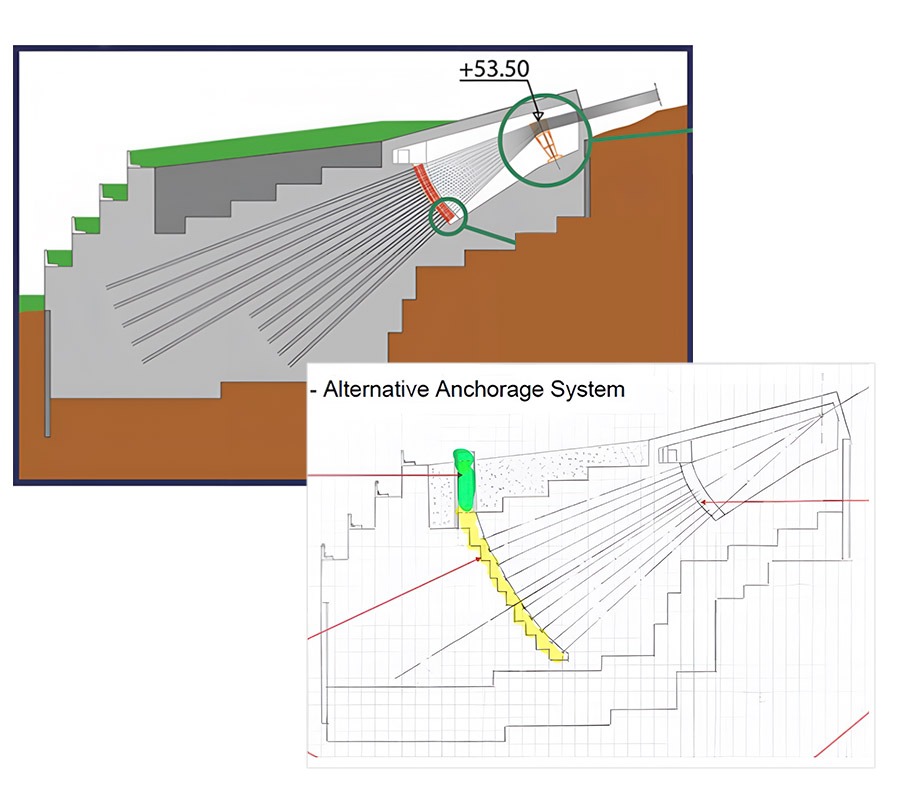
Redesigned anchor blocks: introduction of a rear chamber enabling inspection of the lower part of the blocks. This is needed due to the use of straight anchors for the cable wires (without loops). This ensures that the elements can be fully maintained and enables each component to be individually replaced.
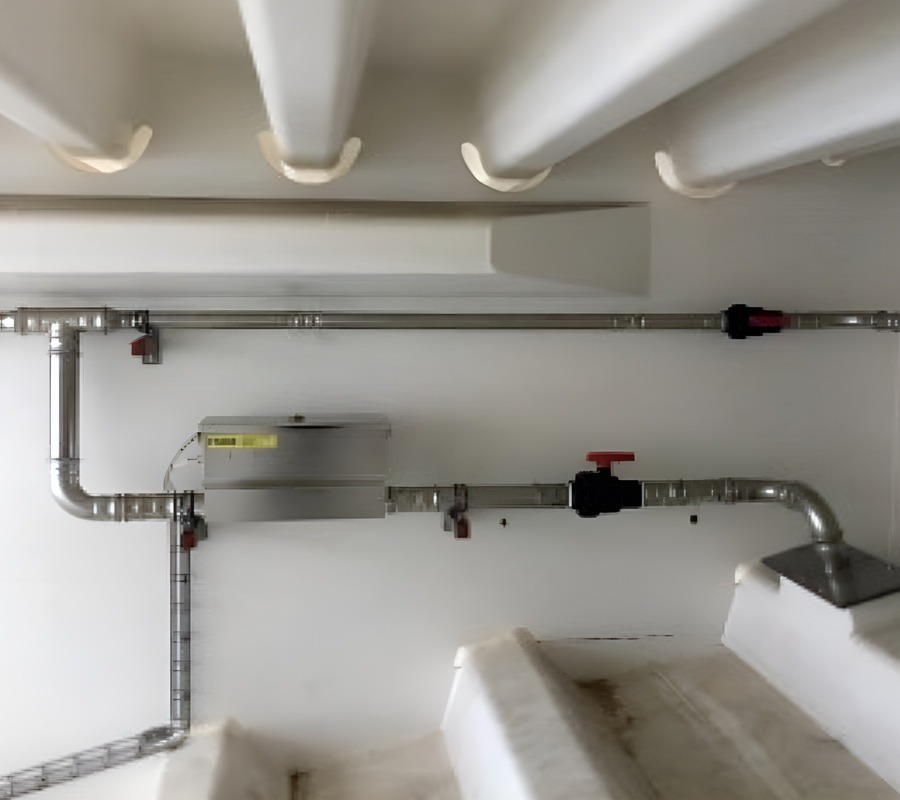
Internal dehumidification system for steel structures: the use of motorised valves and dry air recirculation. The change automates hygrometric control, reducing energy consumption and allowing components within the structures to be safely maintained.
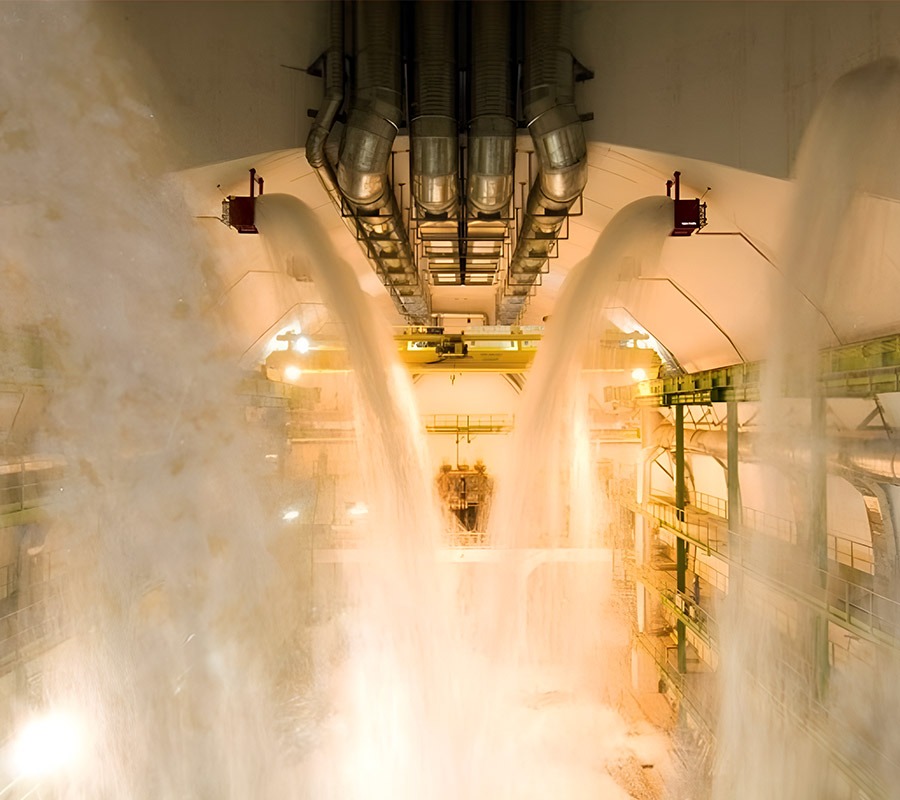
Active and passive fire protection: the upgrade of safety systems through the addition of latest generation passive and active protection systems. The change ensures the maximum structural resilience of key components, even in the event of serious fires caused by hydrocarbons.
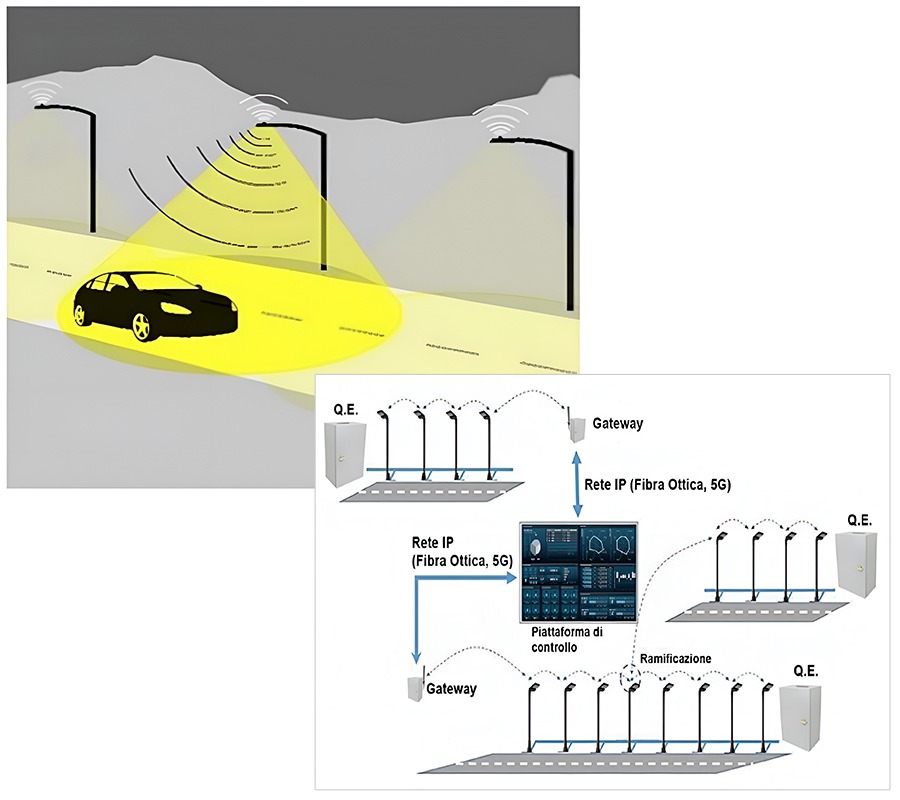
Smart roads: digital, connected highway infrastructure based on multifunctional poles and vehicle-to-infrastructure (V2I) communication, providing advanced driver assistance, improving safety and traffic information and enabling proactive highway management.

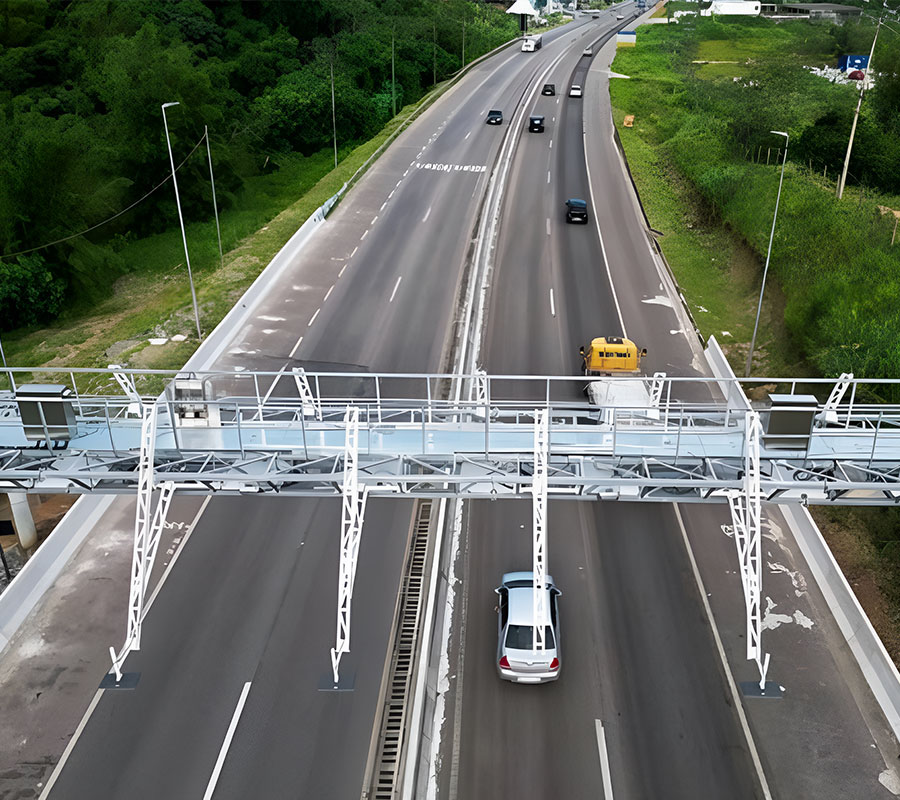
Free Flow tolling: a fully electronic tolling system without barriers that allows vehicles to use roads without stopping or slowing down to pay tolls thanks to automated vehicle recognition. The system improves traffic flow, reduces congestion and emissions and enables efficient, digital flow management.
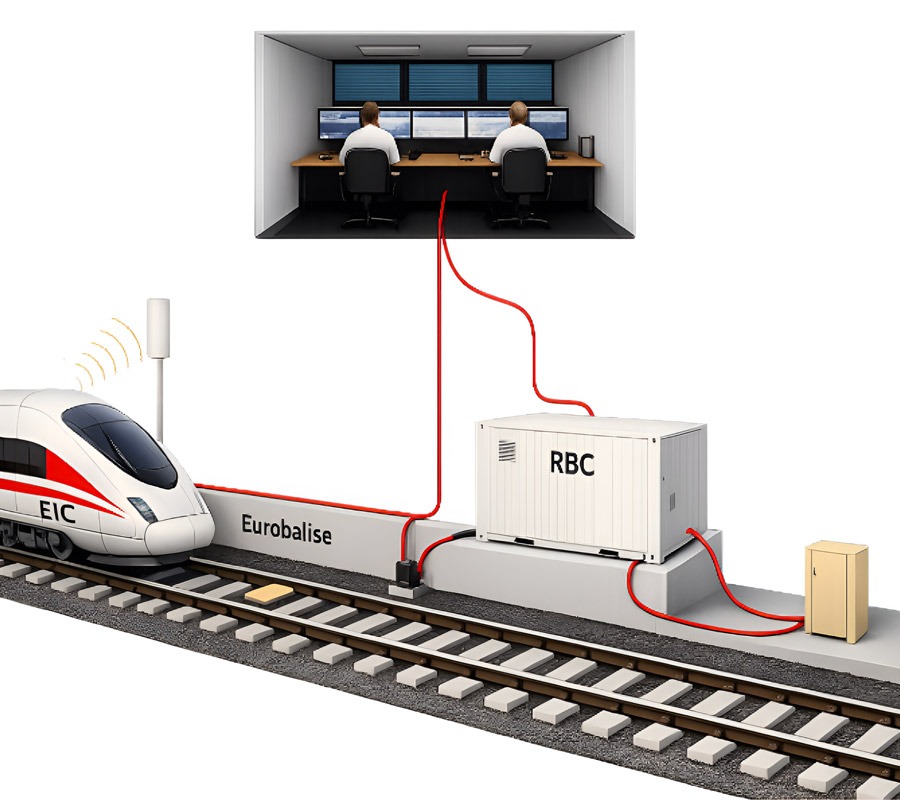
The level 2 ERTMS signalling system: this replaces the previous SCMT system, offering cross-border interoperability and dynamic safety using a Radio Block Centre (GSM-R). This standard optimises management of the line, reduces the need for physical trackside equipment and provides drivers with real-time data, improving safety and efficiency.
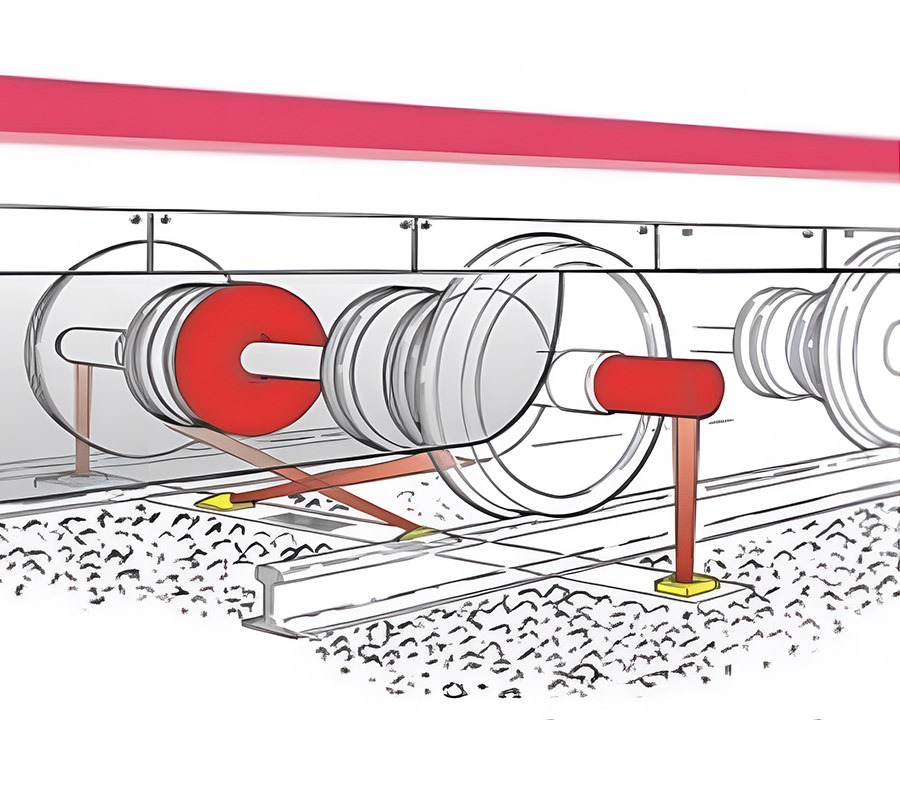
RTB and RTF safety systems: these detect overheating in axle-boxes and brakes using infrared sensors, activating safe automated braking via the signalling systems. These devices ensure train integrity before crossing the bridge, interfacing directly with train control technologies.
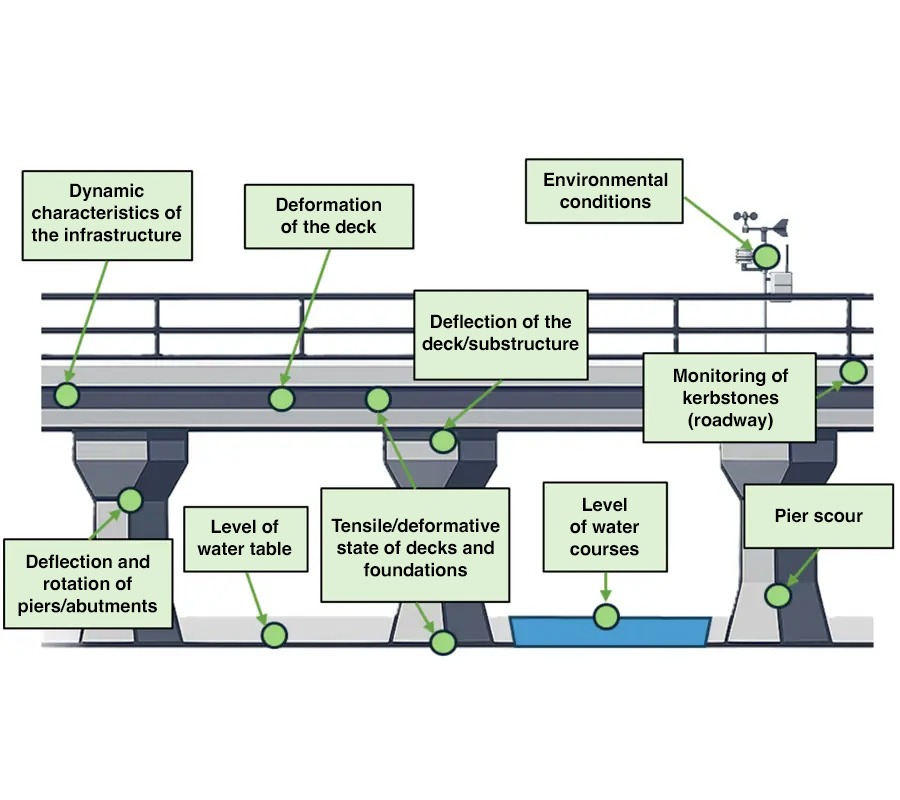
• Geotechnical monitoring: a series of systems are used to continuously monitor ground conditions using standard sensors, such as inclinometers and piezometers, integrated with terrestrial and satellite interferometry techniques. These systems enable prompt detection of any ground movements or geological instability.
• Structural monitoring of the bridge: this involves an updated, advanced system for monitoring structural integrity and the environment using different sensors. From construction through to operation, the system conducts real-time analysis of structural loads and responses, transmitting data to a control centre for safety purposes.
• Monitoring of road and rail links: extension of the structural monitoring system to all land-based viaducts. This collection of sensors, together with the systems used to monitor tunnels, expands on and complements the SHM monitoring provided for in the Final Design, extending it to all the related civil infrastructure.
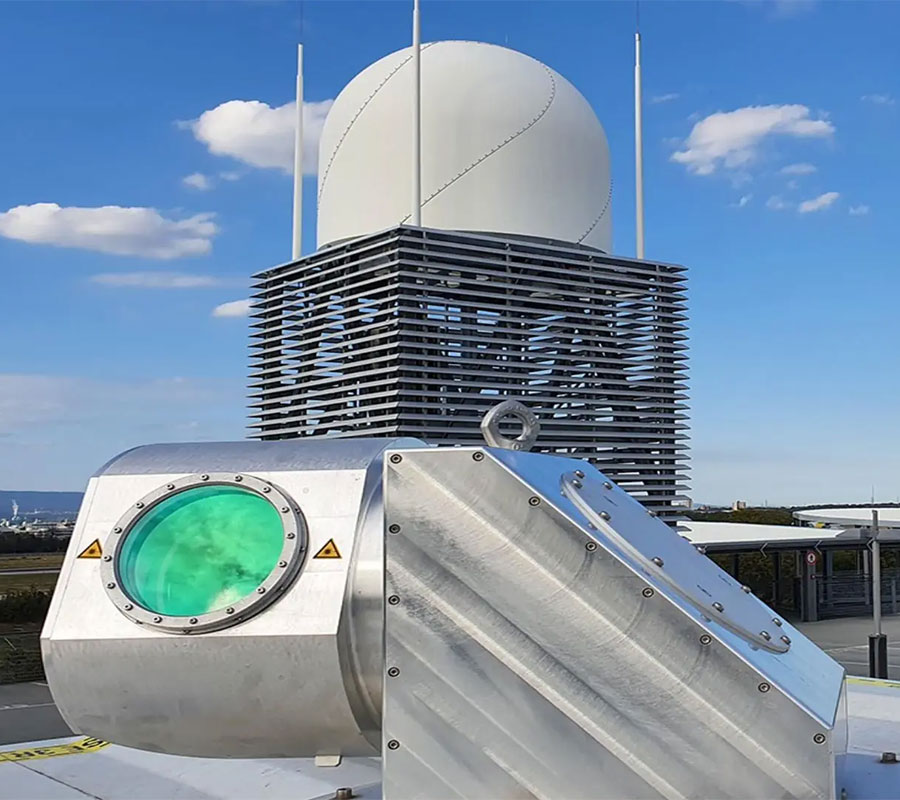
LiDAR: The LiDAR (Light Detection and Ranging) system detects and analyses 3D representations of wind direction and speed, providing essential data on the aerodynamic conditions of the deck and the towers.
Sustainable lighting of the bridge to minimise interference with migratory birds whilst ensuring safety and energy efficiency:
• latest generation LED technology offering a high level of lighting efficiency
• highly directional systems with custom optics and cut-off lighting to limit intensity and the number of lights, eliminating skyglow and the dispersion of light on water surfaces
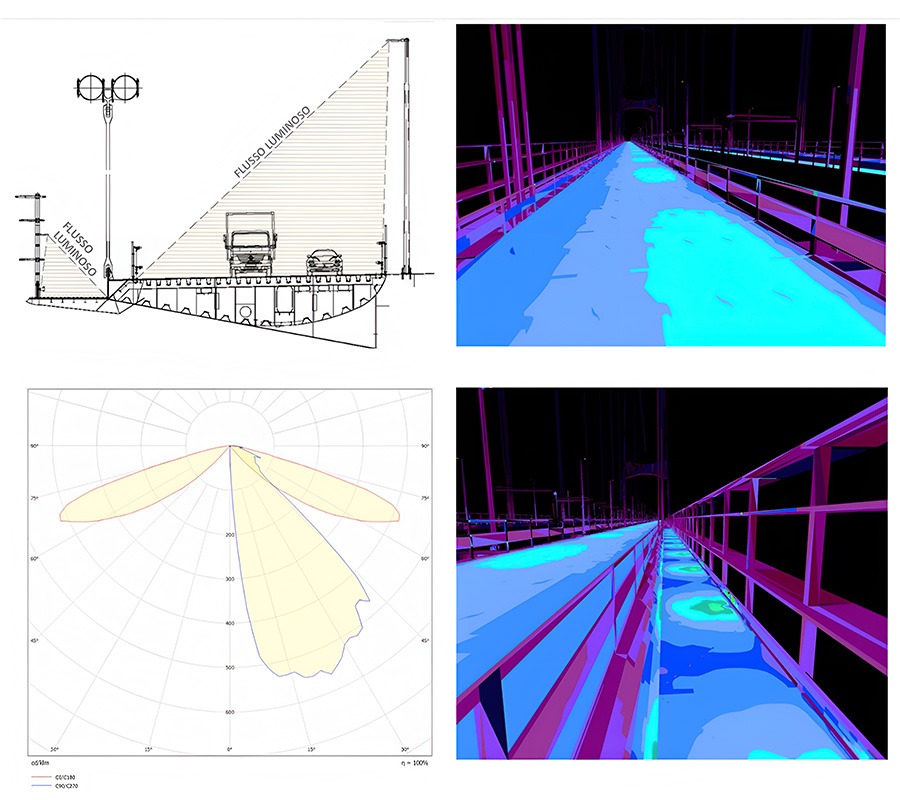
Sustainable lighting of the bridge:
• adaptive regulation using TAI-FAI systems and Tunable White technology to control and dynamically regulate brightness and light flow and modulate intensity and tonality based on safety needs and environmental conditions
• RGBW LED projectors for spotlighting, switched off during spring and autumn migration periods, with narrow beam downlights and spectral colour tuning
• regolazione adattiva con sistemi TAI-FAI e tecnologia Tunable White per il controllo e la regolazione dinamica della potenza e del flusso luminosa e la modulazione di intensità e tonalità in funzione delle esigenze di sicurezza e delle condizioni ambientali
• proiettori LED RGBW per l’illuminazione d’accento con spegnimento nei periodi di migrazione primaverile e autunnale, con fascio stretto orientato verso il basso e modulazione della colorazione spettrale
Integrated Noise Management Plan (INMP) for worksites, with the use of technological and management solutions designed to limit and contain noise levels through customised, organised human health and environmental protection systems, such as adoption of a “buy quiet” procurement policy, soundproofing of major equipment components, high-density soundproofing of casings and panels for particularly noisy fixed plant and machinery, installation of fixed and mobile noise barriers.
Dust Management Plan (DMP) for worksites, based on the BAT (Best Available Technology) concept, using technically and economically viable solutions to prevent, contain and eliminate dust, such as tyre washers, wet cleaning with pressure washers for paved areas, use of fixed or mobile dust cannons or spray nozzles, use of coating agents for unpaved surfaces and the installation of wind barriers.



Operational headquarter
The Operational Headquarters will be built in Calabria, at Piale in the municipality of Villa San Giovanni. It will be a multi-purpose complex hosting activities connected with management of the infrastructure and services, such as shops, restaurants and a conference centre.
The design was produced by Daniel Libeskind, the internationally acclaimed architect and urban designer, who is looking to use the project to translate his vision: “the Strait of Messina Bridge represents a unique way of linking the two coasts, at the same time offering travellers a new opportunity to experience this extraordinary location, a place for both contemplation and entertainment. The bridge is in itself an object that unites, symbolizing freedom of movement. This bridge for the twenty-first century will bring people together and provide a cultural meeting point”.